

Ever wondered how businesses manage to reach your inbox with those perfectly timed, personalized messages? 📧 Welcome to the world of email marketing! It’s not just about sending random emails; it’s an art and science that’s revolutionizing how companies connect with their audience. But what exactly is email marketing, and how does it work its magic?
We’re here to demystify this powerful marketing tool for you. In this post, we’ll dive deep into the world of email marketing, exploring its inner workings and uncovering the secrets behind successful campaigns. From understanding the basics to mastering advanced techniques, we’ll guide you through everything you need to know. Whether you’re a small business owner looking to boost sales or a marketing professional aiming to refine your strategy, our comprehensive guide will equip you with the knowledge to harness the full potential of email marketing.
Ready to unlock the power of your inbox? Let’s explore the essentials of email marketing, including its mechanics, various campaign types, must-have tools, best practices, and how to measure success. Buckle up as we embark on this exciting journey into the heart of digital marketing!
Understanding Email Marketing
A. Definition and purpose
Email marketing is a powerful digital marketing strategy that involves sending targeted messages to a group of recipients via email. Its primary purpose is to build relationships with potential and existing customers, promote products or services, and drive business growth. We use email marketing to nurture leads, increase brand awareness, and encourage customer loyalty.
B. Key components of email marketing
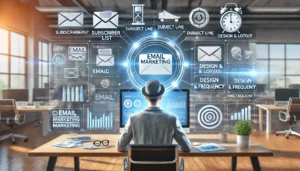
Effective email marketing campaigns consist
of several crucial components:
Subscriber list
Email content
Subject line
Call-to-action (CTA)
Design and layout
Timing and frequency
C. Benefits for businesses
Email marketing offers numerous advantages for businesses:
- Cost-effective
- High ROI
- Targeted messaging
- Measurable results
- Automation capabilities
- Easy to personalize
D. Comparison with other digital marketing channels
| Feature | Email Marketing | Social Media | PPC Advertising |
|---|---|---|---|
| Cost | Low | Low to Medium | Medium to High |
| Targeting | Highly Targeted | Moderately Targeted | Highly Targeted |
| Reach | Limited to Subscriber List | Broad | Broad |
| Conversion Rate | High | Medium | Medium |
| Ownership of Data | Full Control | Limited Control | Limited Control |
We find that email marketing stands out for its cost-effectiveness and high conversion rates. While social media and PPC advertising have their strengths, email marketing provides unparalleled control over our audience and messaging. Now that we’ve established a solid understanding of email marketing, let’s explore how it actually works in practice.
How Email Marketing Works
Building an email list
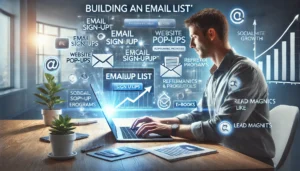
Building a robust email list is the foundation of successful email marketing. We start by creating opt-in forms on our website, landing pages, and social media platforms. These forms should clearly communicate the value proposition of subscribing to our emails. We also implement lead magnets, such as free ebooks or exclusive content, to incentivize sign-ups.
Here’s a quick overview of effective list-building strategies:
- Website pop-ups
- Social media promotions
- Webinars and events
- Referral programs
- Contests and giveaways
Segmenting your audience
Once we’ve built our list, we segment our audience based on various criteria to ensure targeted messaging. Segmentation allows us to send more relevant content, improving engagement and conversion rates.
| Segmentation Criteria | Examples |
|---|---|
| Demographics | Age, gender, location |
| Behavior | Purchase history, website activity |
| Preferences | Product interests, content types |
| Engagement level | Open rates, click-through rates |
Creating compelling email content
We focus on crafting content that resonates with our segmented audience. Our emails should provide value, whether it’s through informative content, exclusive offers, or personalized recommendations. We use attention-grabbing subject lines, clear and concise copy, and a strong call-to-action (CTA) to drive engagement.
Designing effective email templates
An appealing email design enhances the user experience and reinforces our brand identity. We create responsive templates that look great on all devices, using a clean layout, on-brand colors, and eye-catching visuals. We also ensure that our templates are optimized for accessibility and quick loading times.
Scheduling and sending campaigns
Timing is crucial in email marketing. We analyze our audience’s behavior to determine the best times to send our campaigns. We use automation tools to schedule our emails and set up triggered campaigns based on specific actions or events. This approach ensures that our messages reach the right people at the right time, maximizing their impact and effectiveness.
Now that we’ve covered the core components of how email marketing works, let’s explore the various types of email marketing campaigns you can implement to engage your audience effectively.
Types of Email Marketing Campaigns

Welcome emails
Welcome emails are the first point of contact with new subscribers, setting the tone for future interactions. We use these to make a strong first impression and establish a connection with our audience. A well-crafted welcome email can:
- Introduce our brand and values
- Set expectations for future communications
- Provide immediate value to the subscriber
Here’s a comparison of effective welcome email components:
| Component | Purpose | Example |
|---|---|---|
| Greeting | Personalize the message | “Hi [Name], welcome to our community!” |
| Brand introduction | Familiarize the subscriber | “We’re [Brand], your go-to for [product/service]” |
| Value proposition | Highlight benefits | “Get exclusive deals and insider tips” |
| Call-to-action (CTA) | Encourage engagement | “Explore our latest collection now” |
Newsletters
Newsletters are a cornerstone of email marketing, allowing us to maintain regular contact with our subscribers. We use these to share valuable content, company updates, and industry insights. Effective newsletters:
- Provide relevant and engaging information
- Maintain brand awareness
- Nurture long-term relationships with subscribers
Promotional emails
When it comes to driving sales and conversions, promotional emails are our go-to strategy. We use these to:
- Announce new products or services
- Offer special discounts or promotions
- Create urgency with limited-time offers
Transactional emails
Transactional emails are triggered by specific actions or events, such as purchases or account updates. We leverage these to:
- Confirm orders and provide shipping information
- Send password reset instructions
- Notify users of account activity
These automated emails not only provide essential information but also offer opportunities for cross-selling and upselling.
Now that we’ve explored the various types of email marketing campaigns, let’s dive into the essential tools that can help us execute these strategies effectively.
Essential Email Marketing Tools
Email service providers (ESPs)
Email Service Providers (ESPs) are the backbone of any successful email marketing strategy. We rely on these platforms to manage our subscriber lists, design eye-catching emails, and send campaigns to thousands of recipients simultaneously. Some popular ESPs include Mailchimp, Constant Contact, and SendGrid.
Here’s a comparison of key features offered by top ESPs:
| ESP | List Management | Template Design | Automation | Analytics |
|---|---|---|---|---|
| Mailchimp | ✓✓✓ | ✓✓✓ | ✓✓ | ✓✓✓ |
| Constant Contact | ✓✓ | ✓✓ | ✓ | ✓✓ |
| SendGrid | ✓✓✓ | ✓✓ | ✓✓✓ | ✓✓✓ |
Analytics and tracking software
To gauge the effectiveness of our email campaigns, we need robust analytics and tracking tools. These solutions help us monitor:
- Open rates
- Click-through rates (CTR)
- Conversion rates
- Bounce rates
- Unsubscribe rates
Many ESPs offer built-in analytics, but standalone tools like Google Analytics can provide more in-depth insights.
Automation platforms
Automation is crucial for scaling our email marketing efforts. We use these platforms to:
- Set up welcome series for new subscribers
- Create drip campaigns based on user behavior
- Trigger personalized emails based on specific actions
- Schedule content delivery at optimal times
Popular automation tools include Marketo, HubSpot, and ActiveCampaign.
A/B testing tools
To continuously improve our email marketing performance, we employ A/B testing tools. These allow us to experiment with different elements of our emails, such as:
- Subject lines
- Email content
- Call-to-action buttons
- Send times
By testing these variables, we can identify what resonates best with our audience and refine our strategies accordingly.
Now that we’ve covered the essential email marketing tools, let’s explore some best practices to maximize the effectiveness of our campaigns.
Best Practices for Successful Email Marketing
Personalizing your messages
Personalization is key to successful email marketing. We go beyond simply addressing recipients by name. Instead, we tailor content based on subscriber preferences, behaviors, and demographics. Here’s how we achieve effective personalization:
- Segment our email list
- Use dynamic content
- Implement behavioral triggers
- Personalize subject lines and preview text
| Personalization Technique | Benefits |
|---|---|
| List Segmentation | Increased relevance, higher open rates |
| Dynamic Content | Improved engagement, better conversions |
| Behavioral Triggers | Timely communication, enhanced customer experience |
| Personalized Subject Lines | Higher open rates, improved deliverability |
Optimizing for mobile devices
With over 50% of emails opened on mobile devices, we ensure our campaigns are mobile-friendly. We:
- Use responsive design templates
- Keep subject lines short (30-40 characters)
- Optimize images for quick loading
- Use large, touch-friendly buttons
Crafting engaging subject lines
Our subject lines are the gateway to our emails. We make them:
- Clear and concise
- Personalized when possible
- Action-oriented
- Intriguing without being clickbait
Maintaining list hygiene
A clean email list is crucial for deliverability and engagement. We regularly:
- Remove inactive subscribers
- Update contact information
- Use double opt-in for new subscribers
- Offer easy unsubscribe options
Adhering to email regulations
We strictly follow email marketing regulations like CAN-SPAM and GDPR. This includes:
- Getting explicit consent
- Providing clear unsubscribe options
- Including our physical address
- Being transparent about data usage
By implementing these best practices, we ensure our email marketing campaigns are effective, compliant, and provide value to our subscribers. Next, we’ll explore how to measure the success of our email marketing efforts.
Measuring Email Marketing Success
Key performance indicators (KPIs)
When it comes to measuring email marketing success, we rely on several key performance indicators (KPIs) to gauge the effectiveness of our campaigns. These metrics provide valuable insights into how our audience interacts with our emails and help us make data-driven decisions to improve our strategies.
Here’s a list of essential KPIs we monitor:
- Open rate
- Click-through rate (CTR)
- Conversion rate
- Bounce rate
- Unsubscribe rate
- List growth rate
| KPI | Description | Importance |
|---|---|---|
| Open rate | Percentage of recipients who open the email | Indicates subject line effectiveness |
| CTR | Percentage of recipients who click on links | Measures content engagement |
| Conversion rate | Percentage of recipients who complete desired action | Shows campaign effectiveness |
| Bounce rate | Percentage of emails that couldn’t be delivered | Reflects list quality |
Open rates and click-through rates
Open rates and click-through rates are two of the most crucial metrics we track in email marketing. The open rate tells us how many recipients actually opened our email, giving us insight into the effectiveness of our subject lines and sender names. On the other hand, the click-through rate (CTR) shows us how many recipients clicked on links within the email, indicating the relevance and appeal of our content.
Conversion tracking
Conversion tracking is where we see the real impact of our email marketing efforts. We monitor how many recipients take the desired action after clicking through from our email, whether it’s making a purchase, signing up for a webinar, or downloading a resource. This metric helps us understand the true ROI of our campaigns and identify which types of content and offers resonate most with our audience.
ROI calculation
Calculating the return on investment (ROI) of our email marketing campaigns is crucial for justifying our efforts and budget allocation. We determine ROI by comparing the revenue generated from our email campaigns to the costs associated with creating and sending them. This includes factoring in expenses such as email marketing software, design costs, and time spent on campaign creation and analysis.
Email marketing remains a powerful tool in the digital marketer’s arsenal, offering a direct line of communication with our audience. Throughout this post, we’ve explored the fundamentals of email marketing, its inner workings, and the various types of campaigns we can employ. We’ve also discussed essential tools that can streamline our efforts and best practices to ensure our messages resonate with recipients.
As we move forward in our marketing endeavors, let’s remember that successful email marketing is about more than just sending messages. It’s about building relationships, providing value, and respecting our subscribers’ inboxes. By implementing the strategies we’ve outlined and consistently measuring our results, we can refine our approach and achieve greater success in our email marketing efforts. Let’s embrace these insights and take our email marketing to the next level, creating campaigns that truly connect with our audience and drive meaningful results for our business.
Ever wondered how businesses manage to reach your inbox with those perfectly timed, personalized messages? 📧 Welcome to the world of email marketing! It’s not just about sending random emails; it’s an art and science that’s revolutionizing how companies connect with their audience. But what exactly is email marketing, and how does it work its magic?
We’re here to demystify this powerful marketing tool for you. In this post, we’ll dive deep into the world of email marketing, exploring its inner workings and uncovering the secrets behind successful campaigns. From understanding the basics to mastering advanced techniques, we’ll guide you through everything you need to know. Whether you’re a small business owner looking to boost sales or a marketing professional aiming to refine your strategy, our comprehensive guide will equip you with the knowledge to harness the full potential of email marketing.
Ready to unlock the power of your inbox? Let’s explore the essentials of email marketing, including its mechanics, various campaign types, must-have tools, best practices, and how to measure success. Buckle up as we embark on this exciting journey into the heart of digital marketing!
Understanding Email Marketing
A. Definition and purpose
Email marketing is a powerful digital marketing strategy that involves sending targeted messages to a group of recipients via email. Its primary purpose is to build relationships with potential and existing customers, promote products or services, and drive business growth. We use email marketing to nurture leads, increase brand awareness, and encourage customer loyalty.
B. Key components of email marketing
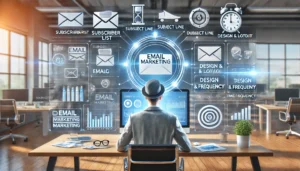
Effective email marketing campaigns consist
of several crucial components:
Subscriber list
Email content
Subject line
Call-to-action (CTA)
Design and layout
Timing and frequency
C. Benefits for businesses
Email marketing offers numerous advantages for businesses:
- Cost-effective
- High ROI
- Targeted messaging
- Measurable results
- Automation capabilities
- Easy to personalize

D. Comparison with other digital marketing channels
| Feature | Email Marketing | Social Media | PPC Advertising |
|---|---|---|---|
| Cost | Low | Low to Medium | Medium to High |
| Targeting | Highly Targeted | Moderately Targeted | Highly Targeted |
| Reach | Limited to Subscriber List | Broad | Broad |
| Conversion Rate | High | Medium | Medium |
| Ownership of Data | Full Control | Limited Control | Limited Control |
We find that email marketing stands out for its cost-effectiveness and high conversion rates. While social media and PPC advertising have their strengths, email marketing provides unparalleled control over our audience and messaging. Now that we’ve established a solid understanding of email marketing, let’s explore how it actually works in practice.
How Email Marketing Works
Building an email list
Building a robust email list is the foundation of successful email marketing. We start by creating opt-in forms on our website, landing pages, and social media platforms. These forms should clearly communicate the value proposition of subscribing to our emails. We also implement lead magnets, such as free ebooks or exclusive content, to incentivize sign-ups.
Here’s a quick overview of effective list-building strategies:
- Website pop-ups
- Social media promotions
- Webinars and events
- Referral programs
- Contests and giveaways
Segmenting your audience
Once we’ve built our list, we segment our audience based on various criteria to ensure targeted messaging. Segmentation allows us to send more relevant content, improving engagement and conversion rates.
| Segmentation Criteria | Examples |
|---|---|
| Demographics | Age, gender, location |
| Behavior | Purchase history, website activity |
| Preferences | Product interests, content types |
| Engagement level | Open rates, click-through rates |
Creating compelling email content
We focus on crafting content that resonates with our segmented audience. Our emails should provide value, whether it’s through informative content, exclusive offers, or personalized recommendations. We use attention-grabbing subject lines, clear and concise copy, and a strong call-to-action (CTA) to drive engagement.
Designing effective email templates
An appealing email design enhances the user experience and reinforces our brand identity. We create responsive templates that look great on all devices, using a clean layout, on-brand colors, and eye-catching visuals. We also ensure that our templates are optimized for accessibility and quick loading times.
Scheduling and sending campaigns
Timing is crucial in email marketing. We analyze our audience’s behavior to determine the best times to send our campaigns. We use automation tools to schedule our emails and set up triggered campaigns based on specific actions or events. This approach ensures that our messages reach the right people at the right time, maximizing their impact and effectiveness.
Now that we’ve covered the core components of how email marketing works, let’s explore the various types of email marketing campaigns you can implement to engage your audience effectively.
Types of Email Marketing Campaigns
Welcome emails
Welcome emails are the first point of contact with new subscribers, setting the tone for future interactions. We use these to make a strong first impression and establish a connection with our audience. A well-crafted welcome email can:
- Introduce our brand and values
- Set expectations for future communications
- Provide immediate value to the subscriber
Here’s a comparison of effective welcome email components:
| Component | Purpose | Example |
|---|---|---|
| Greeting | Personalize the message | “Hi [Name], welcome to our community!” |
| Brand introduction | Familiarize the subscriber | “We’re [Brand], your go-to for [product/service]” |
| Value proposition | Highlight benefits | “Get exclusive deals and insider tips” |
| Call-to-action (CTA) | Encourage engagement | “Explore our latest collection now” |
Newsletters
Newsletters are a cornerstone of email marketing, allowing us to maintain regular contact with our subscribers. We use these to share valuable content, company updates, and industry insights. Effective newsletters:
- Provide relevant and engaging information
- Maintain brand awareness
- Nurture long-term relationships with subscribers
Promotional emails
When it comes to driving sales and conversions, promotional emails are our go-to strategy. We use these to:
- Announce new products or services
- Offer special discounts or promotions
- Create urgency with limited-time offers
Transactional emails
Transactional emails are triggered by specific actions or events, such as purchases or account updates. We leverage these to:
- Confirm orders and provide shipping information
- Send password reset instructions
- Notify users of account activity
These automated emails not only provide essential information but also offer opportunities for cross-selling and upselling.
Now that we’ve explored the various types of email marketing campaigns, let’s dive into the essential tools that can help us execute these strategies effectively.
Essential Email Marketing Tools
Email service providers (ESPs)
Email Service Providers (ESPs) are the backbone of any successful email marketing strategy. We rely on these platforms to manage our subscriber lists, design eye-catching emails, and send campaigns to thousands of recipients simultaneously. Some popular ESPs include Mailchimp, Constant Contact, and SendGrid.
Here’s a comparison of key features offered by top ESPs:
| ESP | List Management | Template Design | Automation | Analytics |
|---|---|---|---|---|
| Mailchimp | ✓✓✓ | ✓✓✓ | ✓✓ | ✓✓✓ |
| Constant Contact | ✓✓ | ✓✓ | ✓ | ✓✓ |
| SendGrid | ✓✓✓ | ✓✓ | ✓✓✓ | ✓✓✓ |
Analytics and tracking software
To gauge the effectiveness of our email campaigns, we need robust analytics and tracking tools. These solutions help us monitor:
- Open rates
- Click-through rates (CTR)
- Conversion rates
- Bounce rates
- Unsubscribe rates
Many ESPs offer built-in analytics, but standalone tools like Google Analytics can provide more in-depth insights.
Automation platforms
Automation is crucial for scaling our email marketing efforts. We use these platforms to:
- Set up welcome series for new subscribers
- Create drip campaigns based on user behavior
- Trigger personalized emails based on specific actions
- Schedule content delivery at optimal times
Popular automation tools include Marketo, HubSpot, and ActiveCampaign.
A/B testing tools
To continuously improve our email marketing performance, we employ A/B testing tools. These allow us to experiment with different elements of our emails, such as:
- Subject lines
- Email content
- Call-to-action buttons
- Send times
By testing these variables, we can identify what resonates best with our audience and refine our strategies accordingly.
Now that we’ve covered the essential email marketing tools, let’s explore some best practices to maximize the effectiveness of our campaigns.
Best Practices for Successful Email Marketing
Personalizing your messages
Personalization is key to successful email marketing. We go beyond simply addressing recipients by name. Instead, we tailor content based on subscriber preferences, behaviors, and demographics. Here’s how we achieve effective personalization:
- Segment our email list
- Use dynamic content
- Implement behavioral triggers
- Personalize subject lines and preview text
| Personalization Technique | Benefits |
|---|---|
| List Segmentation | Increased relevance, higher open rates |
| Dynamic Content | Improved engagement, better conversions |
| Behavioral Triggers | Timely communication, enhanced customer experience |
| Personalized Subject Lines | Higher open rates, improved deliverability |
Optimizing for mobile devices
With over 50% of emails opened on mobile devices, we ensure our campaigns are mobile-friendly. We:
- Use responsive design templates
- Keep subject lines short (30-40 characters)
- Optimize images for quick loading
- Use large, touch-friendly buttons
Crafting engaging subject lines
Our subject lines are the gateway to our emails. We make them:
- Clear and concise
- Personalized when possible
- Action-oriented
- Intriguing without being clickbait
Maintaining list hygiene
A clean email list is crucial for deliverability and engagement. We regularly:
- Remove inactive subscribers
- Update contact information
- Use double opt-in for new subscribers
- Offer easy unsubscribe options
Adhering to email regulations
We strictly follow email marketing regulations like CAN-SPAM and GDPR. This includes:
- Getting explicit consent
- Providing clear unsubscribe options
- Including our physical address
- Being transparent about data usage
By implementing these best practices, we ensure our email marketing campaigns are effective, compliant, and provide value to our subscribers. Next, we’ll explore how to measure the success of our email marketing efforts.
Measuring Email Marketing Success
Key performance indicators (KPIs)
When it comes to measuring email marketing success, we rely on several key performance indicators (KPIs) to gauge the effectiveness of our campaigns. These metrics provide valuable insights into how our audience interacts with our emails and help us make data-driven decisions to improve our strategies.
Here’s a list of essential KPIs we monitor:
- Open rate
- Click-through rate (CTR)
- Conversion rate
- Bounce rate
- Unsubscribe rate
- List growth rate
| KPI | Description | Importance |
|---|---|---|
| Open rate | Percentage of recipients who open the email | Indicates subject line effectiveness |
| CTR | Percentage of recipients who click on links | Measures content engagement |
| Conversion rate | Percentage of recipients who complete desired action | Shows campaign effectiveness |
| Bounce rate | Percentage of emails that couldn’t be delivered | Reflects list quality |
Open rates and click-through rates
Open rates and click-through rates are two of the most crucial metrics we track in email marketing. The open rate tells us how many recipients actually opened our email, giving us insight into the effectiveness of our subject lines and sender names. On the other hand, the click-through rate (CTR) shows us how many recipients clicked on links within the email, indicating the relevance and appeal of our content.
Conversion tracking
Conversion tracking is where we see the real impact of our email marketing efforts. We monitor how many recipients take the desired action after clicking through from our email, whether it’s making a purchase, signing up for a webinar, or downloading a resource. This metric helps us understand the true ROI of our campaigns and identify which types of content and offers resonate most with our audience.
ROI calculation
Calculating the return on investment (ROI) of our email marketing campaigns is crucial for justifying our efforts and budget allocation. We determine ROI by comparing the revenue generated from our email campaigns to the costs associated with creating and sending them. This includes factoring in expenses such as email marketing software, design costs, and time spent on campaign creation and analysis.
Email marketing remains a powerful tool in the digital marketer’s arsenal, offering a direct line of communication with our audience. Throughout this post, we’ve explored the fundamentals of email marketing, its inner workings, and the various types of campaigns we can employ. We’ve also discussed essential tools that can streamline our efforts and best practices to ensure our messages resonate with recipients.
As we move forward in our marketing endeavors, let’s remember that successful email marketing is about more than just sending messages. It’s about building relationships, providing value, and respecting our subscribers’ inboxes. By implementing the strategies we’ve outlined and consistently measuring our results, we can refine our approach and achieve greater success in our email marketing efforts. Let’s embrace these insights and take our email marketing to the next level, creating campaigns that truly connect with our audience and drive meaningful results for our business.
